The first time I really understood what the Japanese mean by a season, I was twenty-four and standing in front of a small Edo-period print at the Mori Arts Center in Roppongi, on a residency I had begged my way into during my last year of design school in Milán. The print was part of a series illustrating the Nijūshi sekki — the twenty-four solar terms that divide the Japanese year — and the one in front of me was labelled, in my friend’s halting translation, “East wind melts the ice.” I had never in my life thought of early February as a thing with a name. February to me was a grey hinge month in Lombardy, the part of the year you survive until the magnolias open in Parco Sempione. But here was an entire culture that had decided February deserved three different names, each lasting about five days, each tied to a specific small event in the natural world. I stood there longer than was polite, and when I went home a week later I started rearranging my studio for the first time in years.
I work as a graphic designer now, mostly brand and editorial, with a small studio off Via Tortona and a steady stream of clients in fashion and hospitality who care very much about how a season feels. Seasonal palette is not a hobby for me. It is part of what people pay me for. And what I want to argue in this post — gently, because the principle is old and does not need defending — is that the Japanese way of treating the year is one of the most useful design tools I have ever absorbed, and it is wasted on professionals. Anyone with a desk and a wall benefits from it. Most Western interiors treat the calendar as static: the same wallpaper in January and July, the same desk in spring and autumn, the same prints up for years. The Japanese tradition does the opposite. It assumes the year is textured, and that your environment should reflect the texture.
This isn’t decoration in the cosmetic sense. It is a practice that produces specific effects — better time-awareness, sharper attention, a quiet anti-monotony technique that supports long projects and long moods. Let me walk you through what the system actually is, why it works the way it does, and the small versions of it I have built into my own apartment and recommended to clients who do not have time for the full ceremonial scaffolding.
The 24 sekki and 72 kō
The classical Japanese calendar layers two systems, one inside the other. The first is the Nijūshi sekki, the twenty-four solar terms, each lasting about fifteen days. The calendar opens the year with Risshun, “beginning of spring,” running from roughly the fourth to the eighteenth of February, which sounds early to a European ear but is the moment when the Japanese poetic year tilts. Spring deepens into Shunbun, the vernal equinox, between the twentieth of March and the third of April. Late summer brings Risshū, “beginning of autumn,” in early August, which again surprises Westerners — autumn starts in the heat, in the imagination, before the leaves show it. And the year closes with Daikan, “greater cold,” from late January through early February, the deepest part of winter just before spring is named again. The whole calendar is built that way: each name gestures at where the year is going, not just where it is.
Inside each sekki sit three kō, micro-seasons of about five days each, and this is where the calendar becomes something I find genuinely useful as a designer. There are seventy-two of them, and the names are small poems. The calendar names early February “East wind melts the ice,” followed in mid-February by “Bush warblers begin to sing,” then “Fish emerge from the ice.” Late March is “Cherry blossoms begin to bloom,” which Italians intuitively understand because we have a similar relationship with the first wisteria. Mid-May is “Caterpillars become butterflies.” Mid-June, the calendar tells you, is when “First peaches taste sweet.” Early October is “Cold dew,” a kō I think about every time I walk to my studio in autumn and find my shoes wet from a grass I did not see was damp. Late October is “Maple leaves turn yellow.” Mid-December is “Bears retreat into hibernation,” which I love because it is somehow both poetic and bureaucratic at once.
Each micro-season comes with its own associated palette, foods, plants, weather signs, sometimes specific flowers or fish that come into season. In the traditional household, the host would change pottery, tableware, scroll art, and tea utensils to match the current kō. I have a print of “Cherry blossoms begin to bloom” on the wall above my desk and I rotate it out every three months for the relevant seasonal print from the same series — a habit I picked up from a Japanese client who quietly judged me, on a video call in November, for having a sakura print up while autumn was at its peak.
Why this practice produces real effects
I want to be careful here, because the easy thing to do with Japanese aesthetic concepts is to wrap them in mysticism and sell them as a lifestyle. The reasons the practice works are not mystical. They are three, and they are concrete.
The first is that time becomes textured. Without seasonal markers, the year is a smooth tube. Tuesday feels like every other Tuesday, October melts into November without your noticing, and you arrive at New Year wondering where the months went. With seasonal markers, even small ones, the brain has handles. “Tuesday in the third week of Risshū” feels distinct from “Tuesday in Daikan” because the cues around you are different — the light, the wallpaper, the print on the wall, the flower in the vase, the music in the room. This solves a specific problem that I think is underdiagnosed in modern indoor life: time blindness. Days blur, weeks become months, and the lack of texture is part of why your year felt short.
The second is anti-monotony. This matters most in long projects. A two-year thesis or a four-year degree or, in my case, a six-month rebrand for a hospitality client feels endless when nothing changes around you. Seasonal aesthetic shifts give you regular small renewals. Same desk, same routine, same software, same problem to solve — but the visual environment shifted twice this month. The brain registers the change and stops feeling stuck. Lofi music has the same problem at the day scale; auditory fatigue sets in if you loop the same five tracks, which is why the streams I respect rotate layers and let rain in occasionally. Visual fatigue works the same way. A wallpaper that has been the same for two years is doing nothing for you.
The third is mood support through attention to small things. Noticing that the first cherry tree on Corso Magenta has opened, or that the first cicadas have started in late June, or that the air in October has the particular cold-dew quality the calendar names, creates a small moment of attention in the day. These moments compound. I have read enough of the well-being research to know this is not a marketing claim — people who pay attention to seasonal markers report higher subjective well-being than people who do not, controlling for the obvious variables. It is a practical application of mindfulness, directing attention to small concrete observable changes rather than living entirely in mental abstraction. For a designer this is professional hygiene. For a student, or anyone whose work happens mostly indoors in front of a screen, it is the difference between living through a year and having a year happen to you.

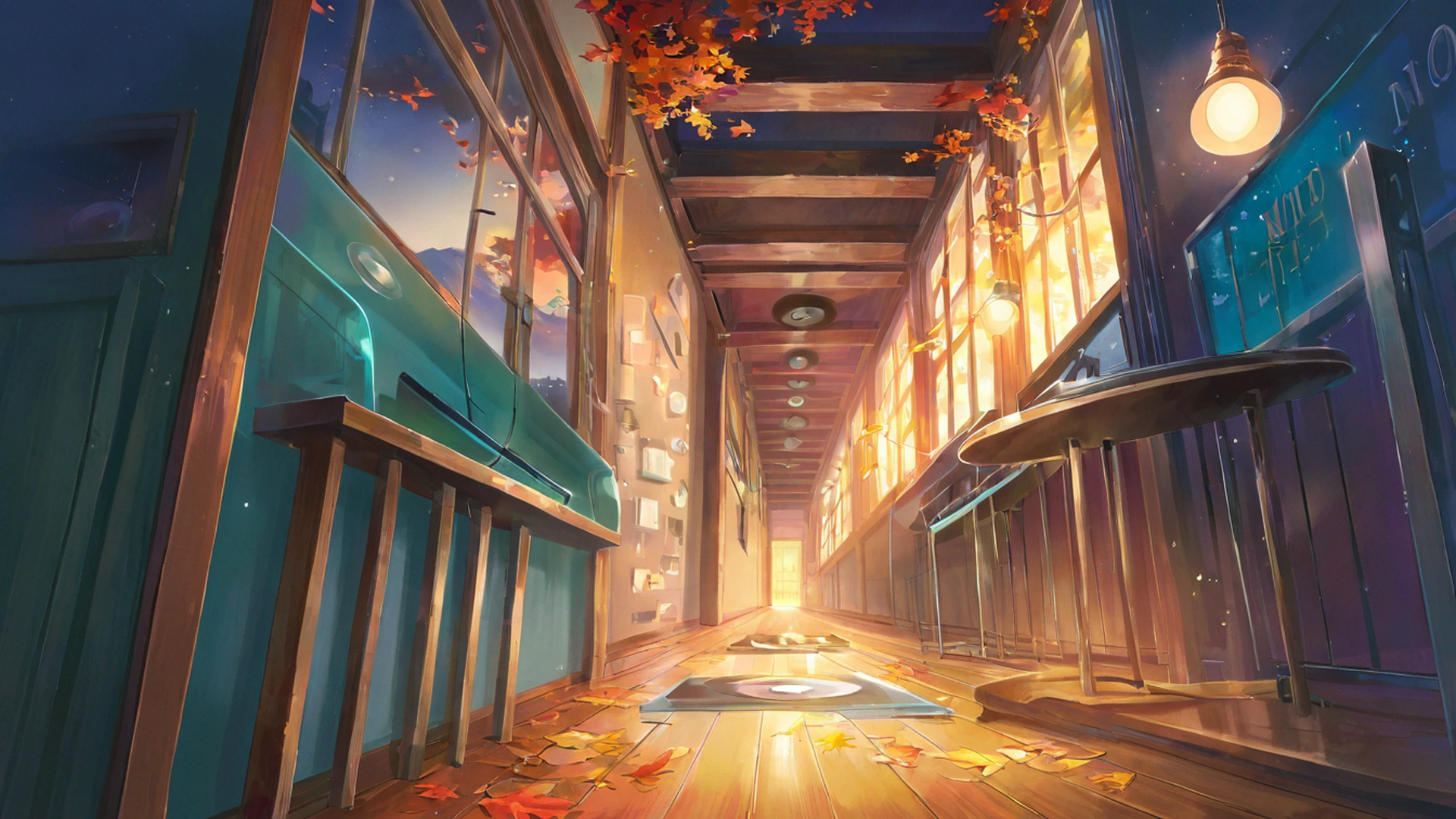
Autumn village — a seasonal aesthetic to set the visual mood
How to build the practice without going full Edo
When clients ask me how to bring this into their space, I do not start with seventy-two micro-seasons. I would lose them in a week. I start with the smallest possible version and let the practice expand naturally if it wants to.
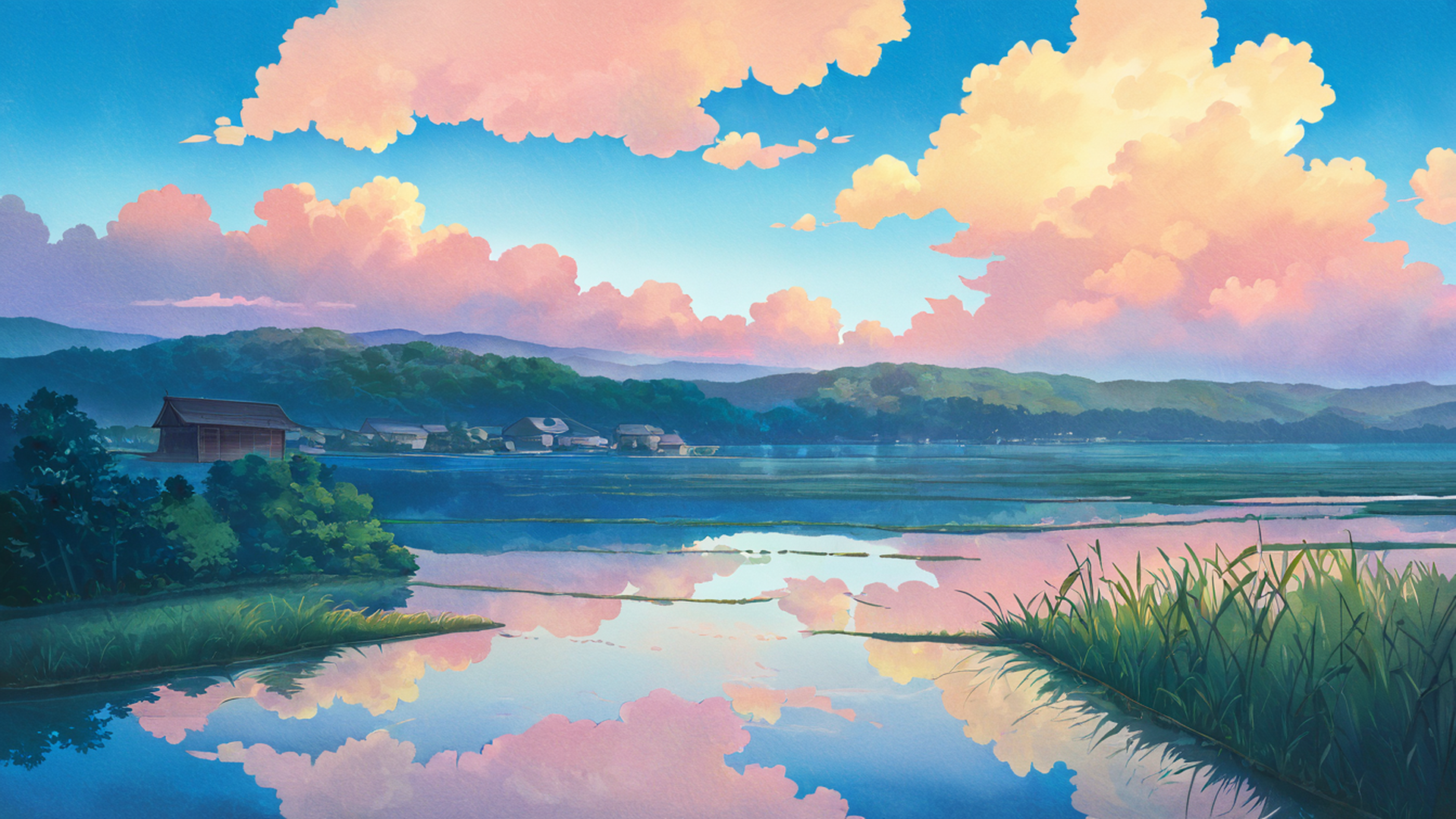
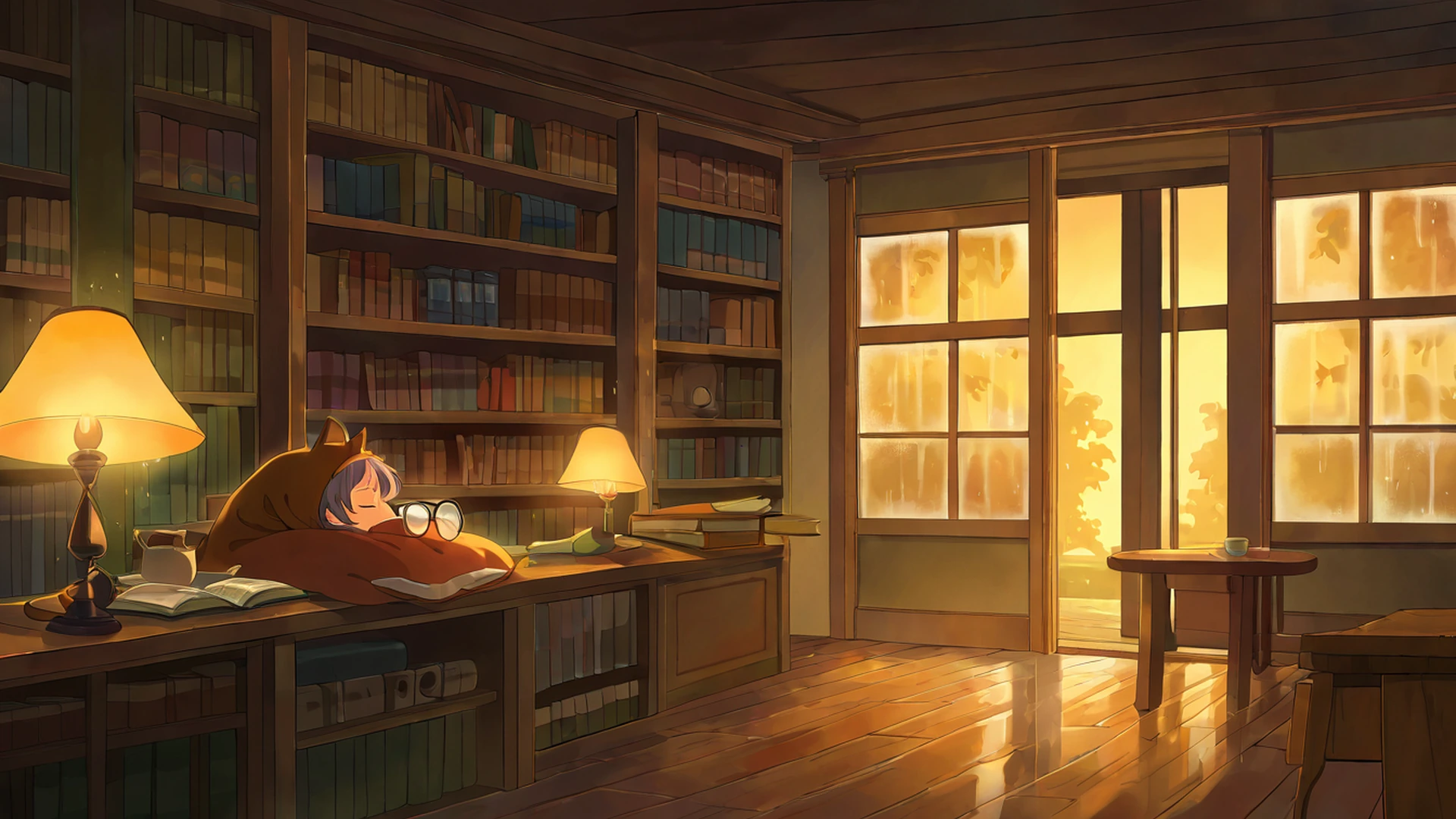
The easiest entry point — and the one I push first — is rotating your desktop wallpaper four times a year, once per season. Fifteen minutes of work per quarter, lasting effect for months. In spring I want soft pinks, light greens, the cherry blossom palette that anyone who has spent April in Kyoto or Tokyo knows by heart. In summer the move is toward deep greens, blue skies, rice field saturation, the slightly heavier light of June and July. Autumn pulls oranges and reds, maple, golden hour, the warm decay end of the spectrum. Winter goes cool — snow scenes, deep blues, the warm interior lighting that gives a cold image its emotional anchor. The aesthetic wallpaper gallery on this site has dedicated theme collections for each part of the cycle, and I genuinely use them on my own machines: the cherry blossom path collection in spring, rice fields summer for the deep summer weeks, autumn maple village as the year turns, and snowy mountain village through January and February. The lantern festival night collection works as a bridge in the festival period of late autumn, and onsen winter carries me through the coldest weeks when I want the visual to feel like warmth. If you do nothing else, do this. Set the wallpaper, set a calendar reminder for three months out, and let the year do the rest.
The next step up, which I do in my own apartment, is to have one seasonal object on the desk and rotate it weekly or every two weeks as the season progresses. A single cherry blossom branch in a tall narrow vase in early spring. A green stem of something later. A single autumn leaf in October — and I mean a single leaf, picked up on a walk, not a styled arrangement from a florist. A small evergreen sprig in December. The point is that the object forces you to go outside and notice what is actually in season where you live, which is half the practice. The other half is the discipline of changing it. I have a client in Como who started doing this two years ago and told me, slightly embarrassed, that it has changed how she walks her dog: she now looks for the next object the whole time she is out.
The full version is what a traditional household would do — different wallpaper, plant, decoration, music, and food alignment for each of the twenty-four sekki periods, with the kō layered underneath for finer resolution. Reading material that matches the seasonal mood, more melancholy literature in autumn, more energetic in spring. I do not do the full version. I rotate four times a year for my desktop, twice a month for the desk object, and four times a year for the prints on the studio wall, which I have grown to enjoy as a small ritual. If you are starting from a static environment, the quarterly rotation is enough. Add layers if you find yourself wanting more.
Music as another seasonal layer
This is the place where the lofi catalogue surprises people who think the genre is one mood on a loop. Lofi has its own internal seasonality, and once you start listening for it you cannot stop. Spring lofi is lighter, the tempos a little faster, brighter melodies, the cherry blossom palette of the audio world — the kind of texture that pairs with coffee shop morning energy and is what I put on when I am sketching new branding directions. Summer lofi relaxes, often leans jazz, sometimes layers cicada sounds for the people who lived their childhood summers in a place that has cicadas; the visual partners are rice fields and beaches. Autumn lofi is the canonical lofi mood, the one most people picture when they hear the word — cooler, slightly melancholy, rain-friendly, the deep listening end of the catalogue. If you ask a non-listener to describe lofi, they will describe autumn lofi without knowing it. Winter lofi goes quieter, longer tracks, more piano-forward, the audio equivalent of an onsen winter or a snowy mountain village; it pairs naturally with the kind of late-night studying that happens when the sun sets at five. The 24/7 stream on this site rotates through all four moods, so if you study across the year you get the seasonal variety automatically. Or you can specifically seek out the spring or autumn selections when the calendar tells you to.
Food and the seasonal anchor
If you live somewhere with seasonal produce — and most of us do, even those of us in cities — eating with the seasons is its own anchor and reinforces everything else. In spring the kitchen turns toward asparagus, peas, strawberries, the light greens that match the wallpaper. Summer is tomatoes and stone fruits and corn and watermelon, the saturated heavy palette of high heat. Autumn brings squash, apples, mushrooms, root vegetables, the warm and earthy register. Winter is citrus and hearty greens like kale and cabbage and the preserved foods that traditional cultures developed for exactly this part of the year. The compound effects are real: better nutrition because produce is at peak nutrient content when it is in season, better flavour because it is at peak ripeness, lower cost because supply is at peak, and the time-awareness benefit on top of all of it. Supermarkets have flattened food into a single year-round average, but the farmers’ market three streets from my studio still operates on the older system, and so do most of the recipes I cook at home. This pairs naturally with the coffee vs tea discussion — many traditional teas are themselves seasonal, with sencha most associated with spring, roasted hojicha leaning into autumn, and ceremonial-grade matcha most often served in the colder months.
Activities that go with each part of the year
The traditional Japanese calendar pairs each season with specific activities, and adapting them to wherever you live is one of the easier parts of the practice. Spring in Japan is hanami, flower viewing, especially the cherry blossoms — you sit outside with a book or a lunch and stay there longer than is practical. The European version is sitting in a park during the first warm days of April with whatever fruit is in season, and opening every window in your apartment to let the trapped winter air out, which I do religiously the first morning the temperature crosses fifteen degrees. Summer is the early-morning study or work session before the heat lands, the long evening walk after the worst of the day has gone, cicada listening if you live somewhere they exist (in Milán they do, faintly, in August), and the matsuri culture of festival evenings, which has its rough European equivalent in the small town festivals that fill the calendar from June through August. Autumn is momijigari, viewing the autumn foliage, which in my case means a day trip into the Lombard pre-alps in late October every year without fail, and the return of long indoor reading sessions as the days shorten. Winter is yuki-mi, snow viewing, where snow exists; onsen or long hot bath rituals; quiet indoor time and deep reading; and the season most associated with tea ceremony. Adapting these to your actual climate and life is fine. The principle is “do something specifically seasonal” rather than “do these specific Japanese things.” A client of mine in Sicily, where it almost never snows, does her winter ritual around the first morning the citrus on her grandmother’s tree is ripe, which is its own kō and just as valid.
What it all combines to
Bringing seasonal cycles into your environment is a small habit with disproportionate effects. Time awareness — you know where you are in the year. Mood texture — your visual and audio environment varies in step with natural cycles rather than running flat against them. Mindfulness, in the unpretentious sense — regular attention to small changes outside. Anti-monotony, which matters most in long projects and degrees but matters in any sustained creative work. And cultural depth, drawing on aesthetic traditions much older and more thought-through than whatever colour of the year a paint brand has declared.
For students this matters because long degree programs benefit disproportionately from anti-monotony techniques. The student who starts in autumn and graduates in spring four years later, with seasons changing visibly throughout the room they study in, has lived through sixteen distinct seasons. The student whose environment never changed has lived through “study time” for four years undifferentiated. The first version remembers their education better, can locate specific memories to specific seasons, and tends to describe the period as having texture. The second often cannot recall what semester something happened in. I notice the same effect in client work. The brand projects I built during specific seasons have a feel to them I can still taste years later. The ones I built during the months I was burned out and not paying attention to the world blur together into one undifferentiated stretch.
If you take nothing else from this post, take the smallest version. This week, change your desktop wallpaper to one that matches the current season where you live. If it is spring, cherry blossom or, if you are late enough in the season to feel early summer arriving, rice fields summer. If it is autumn, autumn maple village or the coffee shop morning collection for the autumn-café feeling that Italians and Japanese both understand without needing to explain. If it is winter, snowy mountain village or onsen winter. Set a reminder to change it in three months. That is the smallest possible version of a seasonal cycle, and after a year of it you will not want to go back. The lifeless quality of a single image on the screen for three hundred and sixty-five days becomes hard to tolerate once you have lived without it.
For more on the broader Japanese aesthetic principles this practice draws from, the wabi-sabi post is the place to start. For the music side that pairs with the visuals, the lofi history post and the piece on Studio Ghibli influence trace the lineage of how this aesthetic became audible.
Time has texture if you let it. Most modern environments hide that fact. A small seasonal practice puts it back, and once it is back you can build the rest of your design life — work, study, home — on top of a year that actually feels like a year.