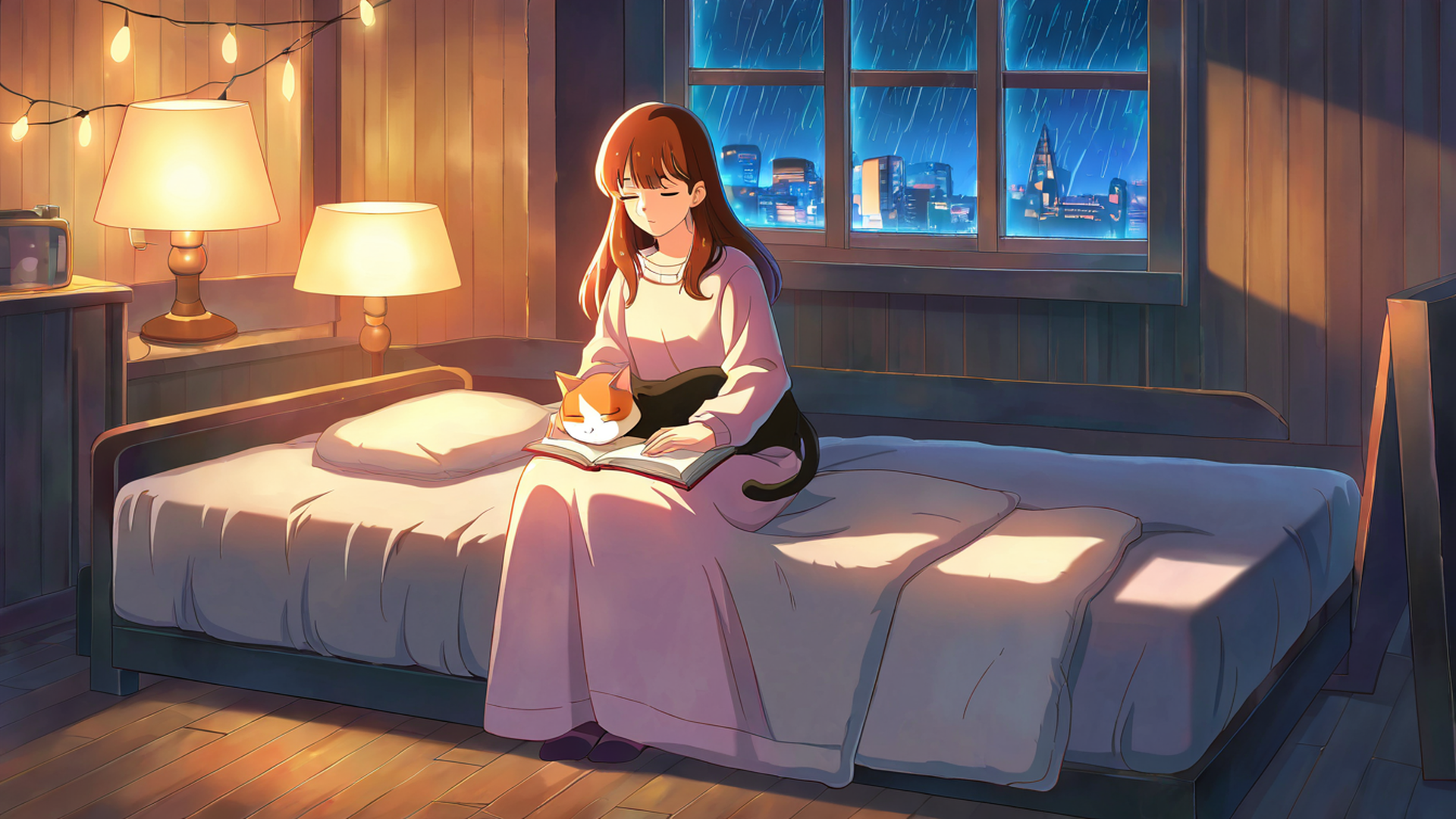
The first time I understood burnout from the inside rather than from a PDF, it was March 2024 and I was eleven months into the writing-up phase of my PhD. I remember the exact afternoon because I had been staring at the same paragraph of my own draft for what felt like twenty minutes, and at some point I realized I had not read a single word of it. My eyes were tracking, my hand was on the mouse, but nothing was going in. I closed the laptop, walked down from my flat in the Albaicín to the little plaza near San Nicolás, and sat on a stone bench for two hours doing nothing. That afternoon was the cheapest piece of data I have ever collected on myself.
I had ignored the warning signs for months. By February I was sleeping nine hours and waking up tired. I had stopped enjoying the music I used to put on while I worked — lofi, mostly, sometimes Bill Evans — and instead worked in silence because anything else felt like noise. I snapped at my partner about a dishwasher. I started rereading the same paragraph of papers I had read fine the year before, three or four times, before giving up. From the inside it felt like I was lazy and getting worse at my job. From the outside, to a colleague who eventually pulled me aside in the corridor at the Facultad de Psicología, it was textbook. “Sofi, you’ve got every Maslach dimension lit up like a Christmas tree.” She was right, and I did not see it until she said it out loud.
I share this because burnout is one of the most misused words in student life, and the misuse is part of why we miss it in ourselves. People say “estoy quemado” after a hard week or two bad nights of sleep. Those are real experiences, but they are not what clinicians mean by burnout, and not what research on the Maslach Burnout Inventory has been measuring for forty years. The strategies that fix ordinary tiredness are different from what pulls you out of the real thing. This guide is for students, self-learners, and knowledge workers who suspect they have crossed the line from tired into something heavier. It is not medical advice, and if anything I describe resonates strongly, please speak with a licensed therapist or your primary care doctor. Sleep disorders, depression, and thyroid problems can all masquerade as burnout, and a clinician can tell them apart in ways a blog post never will.
What burnout actually is
The WHO classifies burnout as an occupational phenomenon rather than a medical condition, and it has three dimensions that map onto what Christina Maslach has been writing about since the early 1980s. The first is emotional exhaustion — the feeling of being drained even after rest, when weekends no longer restore you. The second is cynicism or depersonalization, a growing distance from the work where you stop caring about outcomes you used to care deeply about. The third is a reduced sense of accomplishment, where even when you finish things, they feel meaningless. I had all three by February. The thesis I had been excited about in October felt like an obligation I had inherited from a previous version of myself.
A student who misses a deadline and sleeps badly for two nights is tired. A student who has been cramming for six weeks, has started avoiding their own notes, and feels nothing when they get a good grade is closer to burnout. The first resolves with a weekend. The second usually does not, and trying to fix it with a weekend often makes it worse, because the weekend “did not work” becomes another piece of evidence that you are the problem.
Why students are especially vulnerable
There are three structural features of student life that make burnout easier to reach than people realize, and I think about all three when I watch new doctorands in my cohort start their second year. First, there is no clean boundary between work and rest. Studying can always be extended, and every hour of rest carries a small weight of guilt. I used to read novels on Sunday evenings and feel like I was stealing from the thesis. Second, feedback is delayed. You work for months before you know whether the chapter is good, whether the reviewer will accept the paper. Allostatic load — the cumulative wear and tear from chronic stress responses that do not get to resolve — is essentially a quantified version of this problem.
The third feature is what I sometimes call identity fusion. For many students, who-I-am is closely tied to how-I-am-doing-academically. A bad grade does not feel like a bad grade; it feels like a bad person. Recognizing this trio is not an excuse, it is a map. Burnout is a predictable outcome when those three conditions compound for long enough, and one of the things that helped me most was hearing my supervisor say, “this is a process, not a character flaw.”
The warning signs I ignored
The obvious signs of burnout — exhaustion, dread, total loss of motivation — usually show up late, when the problem is already serious. The earlier signs are easier to dismiss and, for that reason, more important to learn to notice. In my own case, the first thing that changed was that my “just five more minutes” scroll sessions kept getting longer every week, and I did not connect it to stress. Now I know what I was doing was self-medicating. My brain wanted a dopamine drip that did not require me to face the chapter, and Instagram delivered. If your phone use is creeping up without anything specific happening on it, that is data.
The next thing, in retrospect, is that I started rereading the same paragraph three or four times without absorbing anything. Short-term and working memory are among the first casualties of chronic stress, and the default mode network — the constellation of brain regions that lights up when you mind-wander — gets noisy and intrusive when the prefrontal regulators are tired. I procrastinated on things I used to enjoy, not just on things I dreaded. When my Sunday lofi-and-coffee ritual started feeling like a chore, that was a louder signal than the thesis itself feeling like a chore, but I missed it. Small annoyances became disproportionate; I snapped at my flatmate about a window left open for thirty seconds, and it was not about the window. Physical symptoms accumulated quietly — tension headaches, a jaw I clenched in my sleep, shallow breathing, two colds in three months when I usually get one a year. None of these alone is diagnostic; the combination over several weeks is what matters.
The difference between rest and recovery
Most students treat rest as the absence of work, and I did too for a long time. But real recovery has a specific shape that absence alone does not provide, and the recovery-experiences framework from Sabine Sonnentag’s lab is one of the most useful things organizational psychology has handed us in twenty years. She and her collaborators separate recovery into four ingredients that apply to studying as well as to jobs. There is psychological detachment, mentally disengaging from the work entirely — thinking about your thesis while watching a film does not count, and yes, I did that for months. There is relaxation, low-activation positive states like walking, warm showers, slow music, reading for pleasure. There is mastery, low-stakes activities where you improve at something unrelated — for me it became cooking Andalusian recipes my abuela had taught me. And there is autonomy, doing things because you chose them rather than because a syllabus assigned them.
This is also why scrolling social media for three hours does not feel restorative, even though technically you were not studying. It scores zero out of four. Lofi listening without a task in the background is one of the few activities I know that scores on all four at once — mild detachment, high relaxation, a small sense of aesthetic mastery if you pay attention to the music, and pure autonomy.
What actually worked: a two-week reset
If you suspect you have slid from tired into early burnout, and medical causes have been ruled out by someone qualified to rule them out, the protocol I used for myself and have since suggested to two friends in my cohort runs about two weeks and has two phases. I am not going to pretend it is a cure. It is a starting point, and for early-stage burnout it has been enough for me and for them. For deeper burnout it is at most a first step that buys you the clarity to ask for more help.
The first week is about recovering the physical substrate, which sounds obvious until you realize how systematically students sabotage it. Sleep is the single biggest lever, and anchoring a consistent wake time — even on weekends, especially on weekends — does more than any sleep tracker app I have tried. I shifted my wind-down routine to start ninety minutes before I wanted to be asleep, which felt absurd until the second week when I realized I was actually sleeping. Daylight within the first hour of waking, ten minutes minimum, resets the circadian rhythm more effectively than almost anything else; I walk a loop around Plaza Larga most mornings now and the difference is noticeable. Move your body daily but not intensely — walks longer than thirty minutes outperform short hard workouts for early burnout recovery, partly because hard exercise is itself a stressor an already-taxed nervous system reads as more load. Eat regularly. Living on café cortado is a form of low-grade fasting stress the body interprets as ongoing threat, and the cortisol curve never gets to come down.
The second week is about rebuilding a relationship with work, not catching up on it. Start very small — one pomodoro of light review per day, nothing more, and stop even if you feel like you could keep going. The point is to re-establish a neutral feeling about studying before you ask anything difficult of yourself. Remove ambiguity by writing down exactly what you will study tomorrow, on paper, before bed: not “study biology” but “read pages 84 to 96 and make flashcards for the six key enzymes.” Use clean environmental cues — a specific playlist, a specific desk lamp, a specific wallpaper. These anchor the brain and reduce the activation energy of starting, which is most of the battle in early recovery. And protect one evening and one weekend block as fully work-free. I now block Sunday afternoons on my calendar with the word “nada,” and I treat that nada as non-negotiable.
If after two weeks you feel no improvement at all, that is important information rather than evidence you have failed at recovery. It usually means either there is an underlying issue beyond burnout — depression, anemia, thyroid problems, sleep apnea, ADHD — or the structural conditions in your life are still producing the burnout faster than recovery can repair it. Both cases warrant a conversation with a professional rather than more self-management.
Music, environment, and the nervous system
One thing I return to in my own research and in conversations with friends is that the nervous system reads environment about as strongly as it reads thoughts. This is why your dorm room can feel hostile after you have associated it with three months of cramming, and why the same flat where you wrote your master’s thesis can feel different once you stop working in it for a week. Two cheap levers most students underuse are sound and visual context. A soundscape of ambient rain, forest loops, or slow lofi at low volume during recovery periods helps the autonomic nervous system move out of the alert state — and one of the reasons I am happy to write here is that I genuinely use a 24/7 lofi stream for this. When I do not feel like choosing music, I do not have to. The visual environment matters in a parallel way; cluttered fields increase background cognitive load even when you are not consciously attending to them, and a tidy desk with warm lighting and a calm wallpaper subtracts a tax you did not know you were paying. Japanese landscape aesthetics — shrines in mist, rainy porches, forest paths — are particularly effective at signaling slow to the brain, which is part of why they became so popular as study wallpapers. None of this is a cure, but each reduces the friction the environment charges on recovery.
When professional help is the right answer
Please do not read this post as an alternative to therapy. A trained therapist can distinguish between burnout, a depressive episode, generalized anxiety, and ADHD — all of which look similar from the inside but respond to genuinely different interventions, and I am not qualified to make that call about you any more than I was about myself in February. If symptoms persist for more than six weeks despite rest, if you are losing weight or sleep without trying, if you are having thoughts of self-harm even fleetingly, if you are using alcohol or cannabis to manage day-to-day functioning, or if family members are voicing concern, please book an appointment. Most universities offer free counseling to enrolled students, including mine. Many countries have free public mental health lines. The cost of one session is cheaper than a dropped semester.
Small rituals that compound
Recovery is boring, and I think this is the part nobody warns you about. There is no clever hack that replaces the slow accumulation of sleep, boundaries, and gentle re-entry into work. That slowness is the point. Burnout is what happens when the system runs too fast for too long; the answer is not to run faster, and not to stop entirely, but to find a pace that can sustain itself. The rituals that compounded for me sound silly when I list them. A five-minute shutdown routine at the end of each study session, where I tidy the desk, close tabs, and write one sentence about what I actually did — the brain needs that closure, and without it the work follows you into the evening. One full no-work day per week, the same day every week. A shared accountability partner; my partner asks me on Friday evenings how my week actually went and I am honest, which is harder than it sounds, because isolation is the accelerator of burnout in a way the literature is only beginning to quantify properly. A default wind-down playlist, so the decision of what to put on when I finish is already made.
If this post arrived in a week when everything feels heavier than usual, please take that seriously. Take tonight off. Turn on a lofi stream, drink water, go to bed early. Tomorrow will look different, and even if it does not, the day after that begins to.
Further reading on our site
For sessions where you want structure rather than open work, I’d point you to our guide on how to use the Pomodoro technique with lofi music. If your physical space is part of what is grinding you down, there is a piece on cozy desk setup inspiration with simple ways to make a room feel calmer. And during recovery weeks, when I want my phone to feel like part of the calm rather than the noise, I rotate through our Japanese aesthetic wallpapers — they are free, and switching them every few days is a tiny ritual I have come to look forward to.