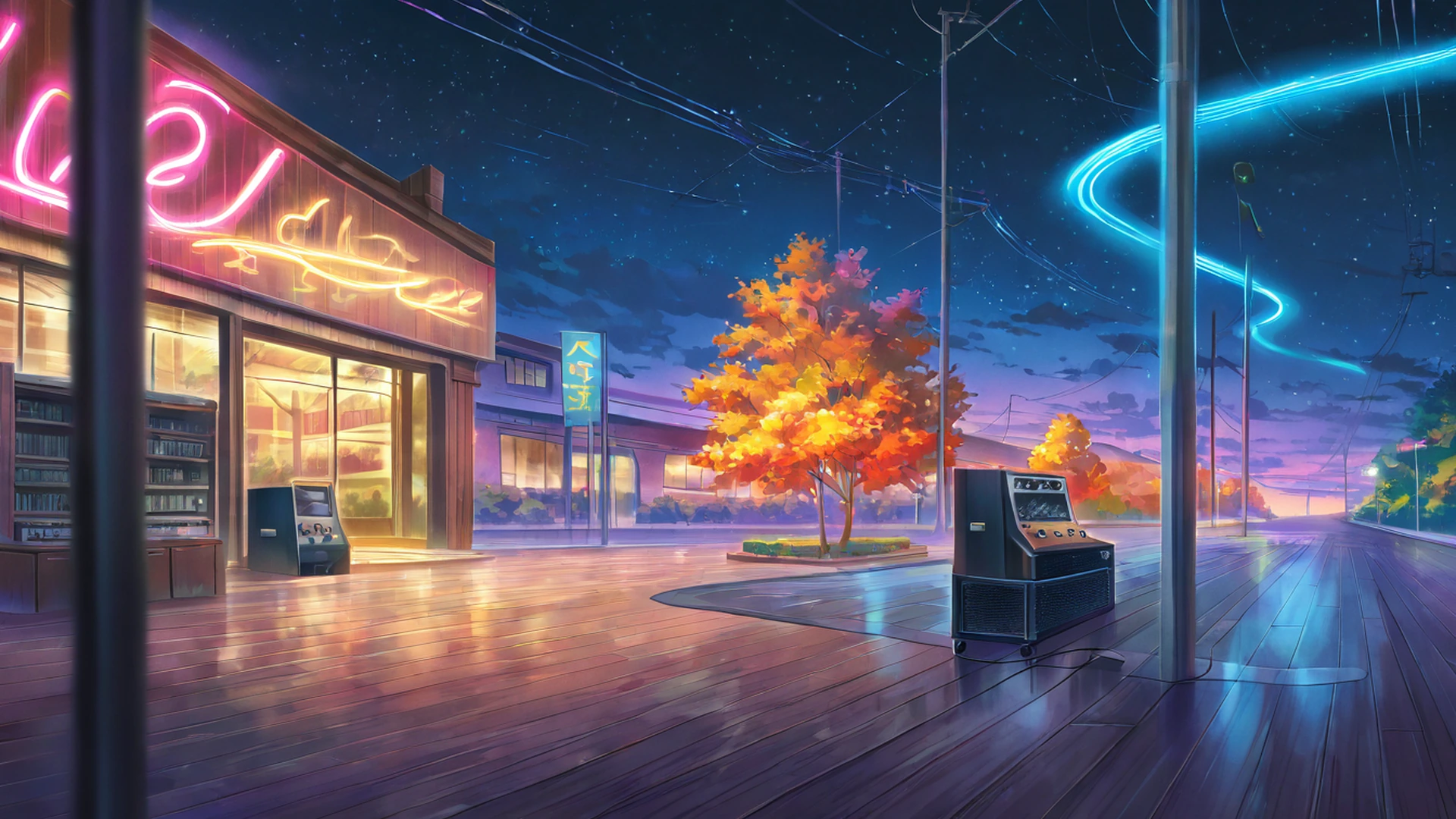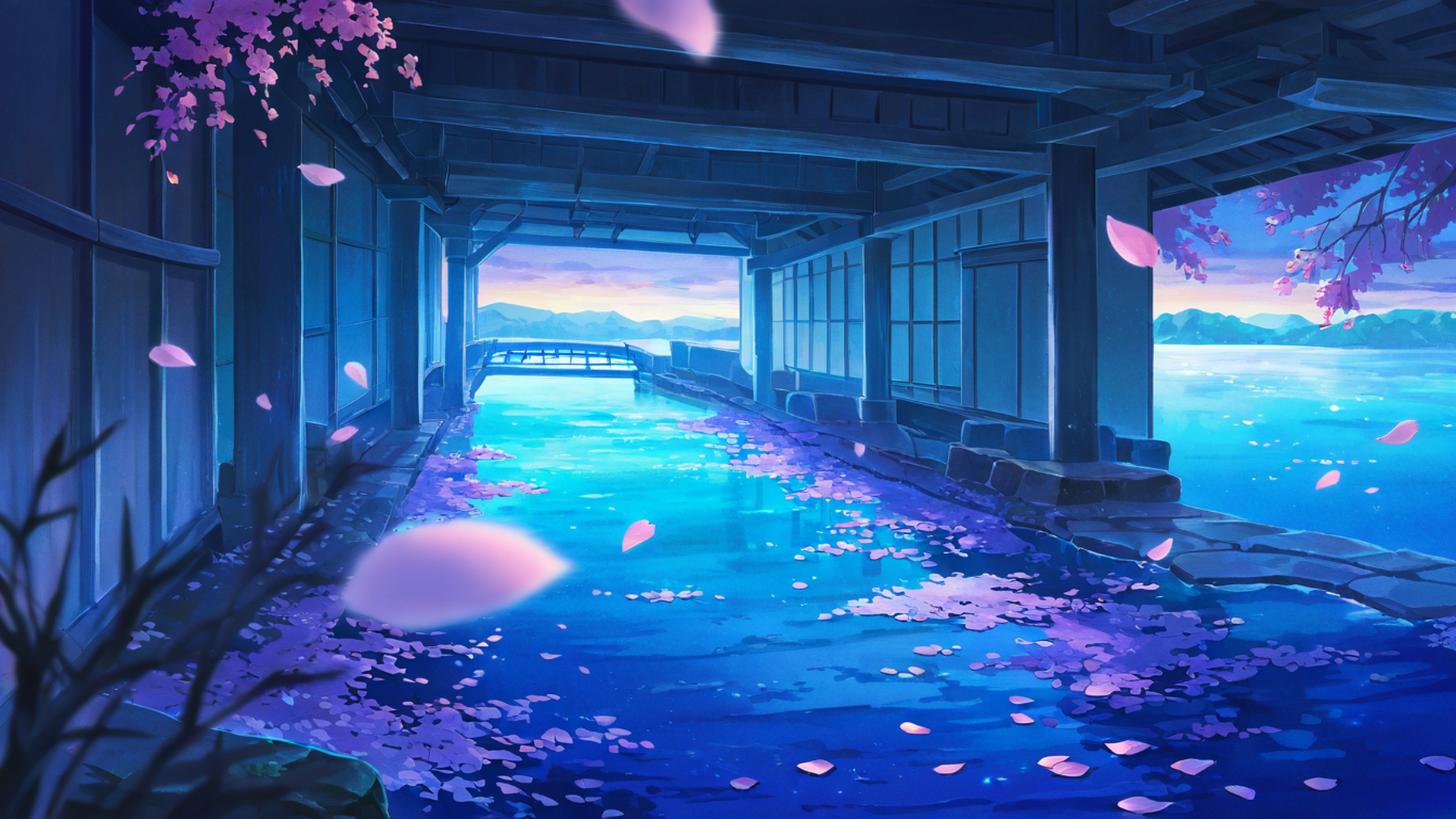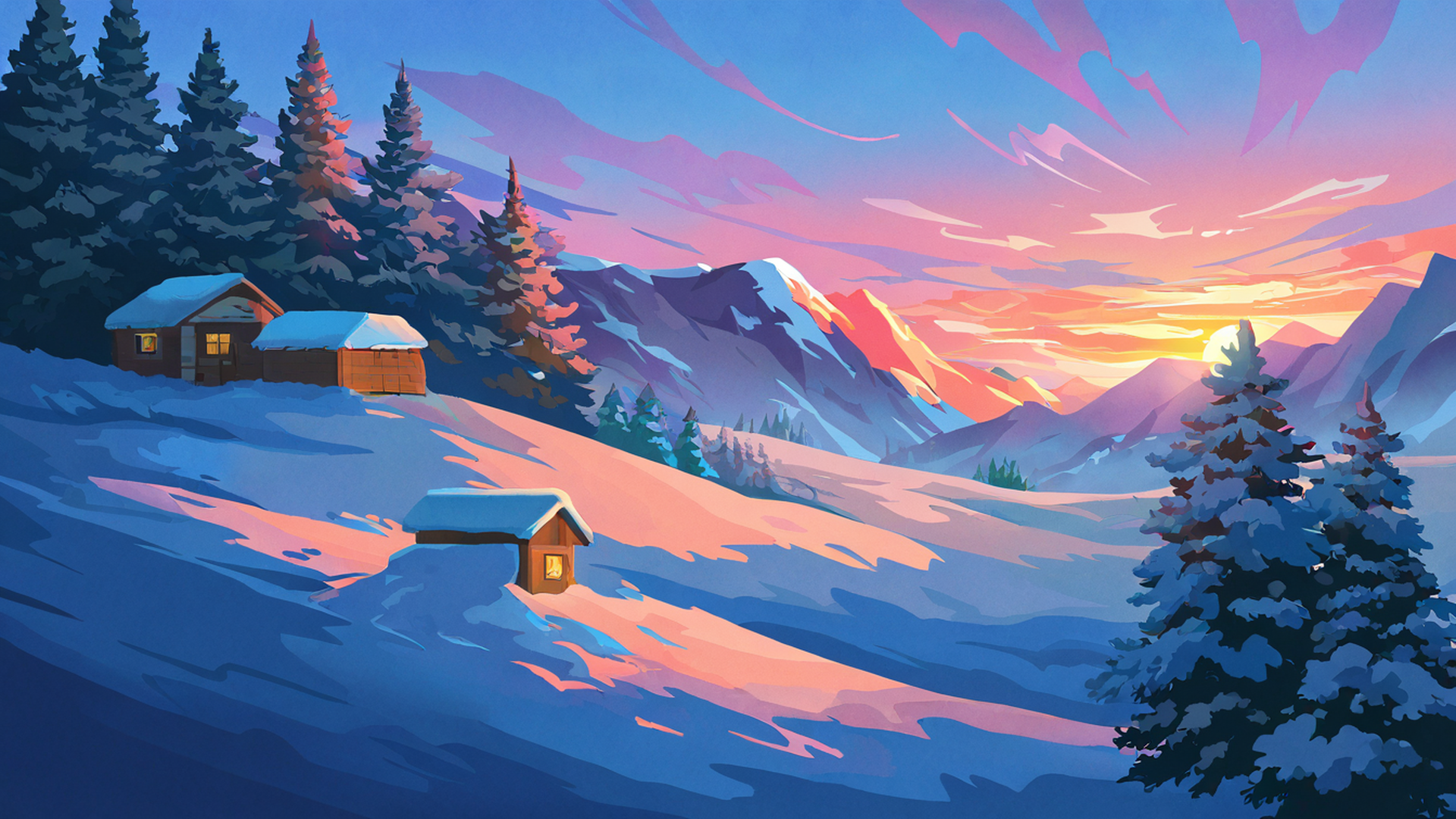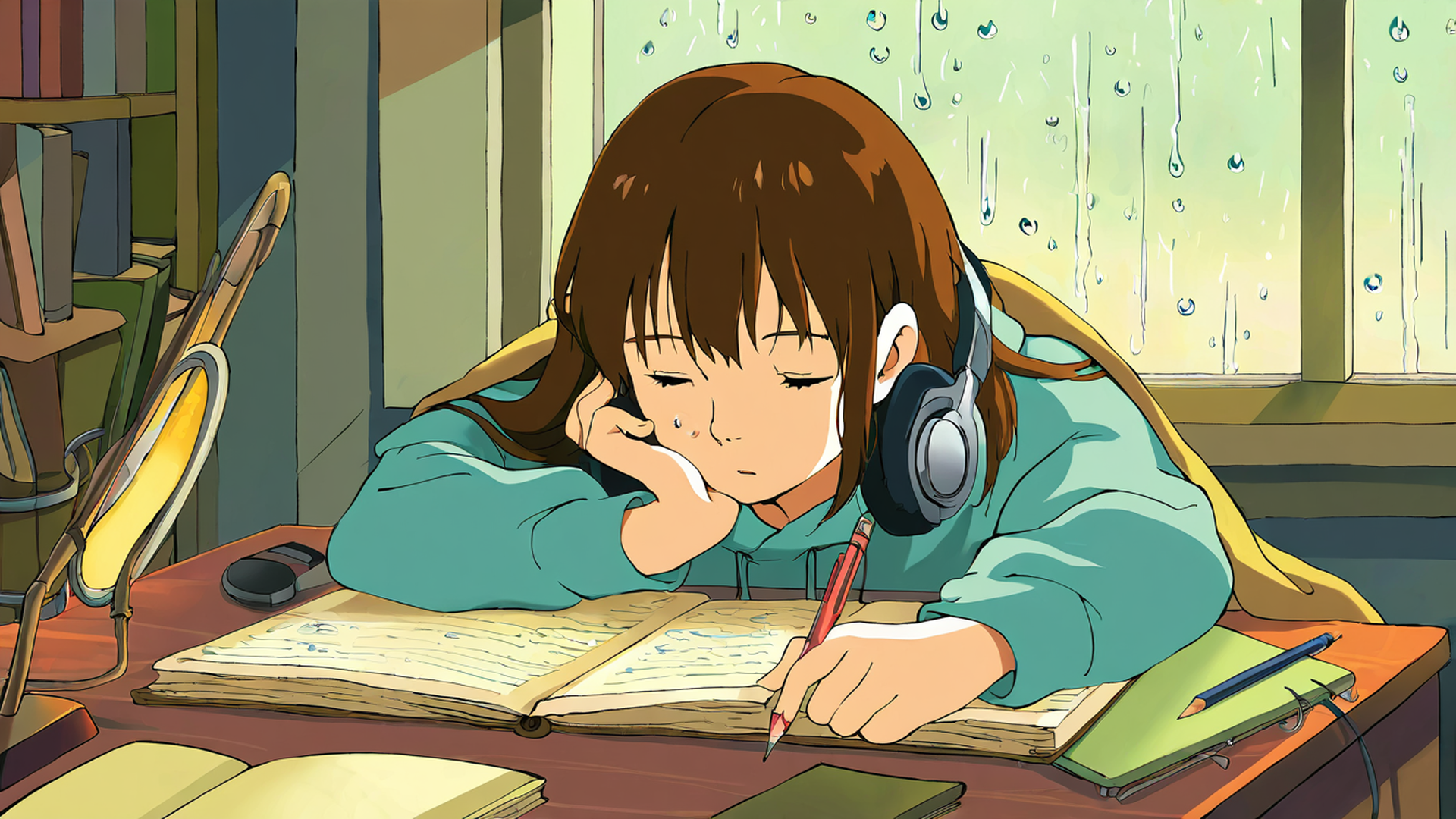
Open almost any lofi stream and you will see a variation on the same picture: an anime-style character doing something quiet, usually at night, usually near a window. There is a desk lamp, maybe rain, maybe a cat. Very little moves. The image is so standard now that it is easy to forget it had to come from somewhere.
It came from several places at once: two anime series that paired animation with jazz and hip hop, the films of Studio Ghibli, the early YouTube habit of borrowing anime clips, and the copyright takedowns that ended that habit. This article traces each one. Lofi Study 24/7 is not affiliated with Studio Ghibli, Lofi Girl or any of the studios mentioned.
Late-night anime with a jazz and hip-hop soundtrack
Two series by the director Shinichirō Watanabe did more than anything else to link anime with the music that became lofi.
Cowboy Bebop (1998), made by the studio Sunrise, is a space western about a crew of bounty hunters, built around a score by Yoko Kanno, mostly jazz, performed by the band she formed for it, the Seatbelts. Kanno has said the music was one of the first parts of the production, started before most of the characters and story were finalized. In the United States it was the first anime shown on the night Cartoon Network’s late-night block Adult Swim debuted, September 2, 2001, and it is often described as a “gateway” series that brought a generation of Western viewers into anime.
Samurai Champloo (2004–2005), Watanabe’s next TV series, made by the studio Manglobe, did the same with hip hop. It set its story in a stylized Edo-period Japan full of deliberate anachronisms, and its score came from hip-hop producers: Tsutchie, Fat Jon, Force of Nature and Nujabes. For many Western fans, the show was their introduction to Nujabes and to the jazz-rooted beats that lofi would later build on (more in the Nujabes article).
The connection to lofi is not just musical. The DJ Ryan Celsius told Vice in 2018 that the lofi scene traces back to nostalgia for Adult Swim and Toonami, the Cartoon Network blocks that brought these shows to Western audiences. In his words, those years “created a cross section of people that enjoyed both anime and wavy hip-hop beats.” When those viewers grew up, a stream that combined the two felt familiar.
Studio Ghibli and the beauty of nothing happening
The other major influence is Studio Ghibli, founded in Tokyo on June 15, 1985, by the directors Hayao Miyazaki and Isao Takahata and the producer Toshio Suzuki. Ghibli films are full of quiet, unhurried moments: a character waiting at a bus stop in the rain, looking out of a train window, or sitting at a desk late at night.
Miyazaki has a name for this. In a 2002 interview with the critic Roger Ebert, who praised the “gratuitous motion” in his films, Miyazaki said: “We have a word for that in Japanese. It’s called ma. Emptiness. It’s there intentionally.” He then clapped his hands a few times and explained that the time between the claps was ma: “If you just have non-stop action with no breathing space at all, it’s just busyness.”
That idea, a scene that is calm and alive without anything really happening, is exactly what a good lofi visual tries to do. The concept of ma also matters in design more generally, and is covered in how to choose a wallpaper that doesn’t distract you.
The Ghibli clip that started it all
The most direct link is a single scene. Whisper of the Heart (1995), directed by Yoshifumi Kondō and written by Miyazaki, follows Shizuku Tsukishima, a junior-high student who wants to become a writer. When the French channel ChilledCow started its 24/7 lofi stream on February 25, 2017, its visual was a looping clip of Shizuku doing her homework at her desk.
Borrowing anime footage was common in the early scene. Juan Pablo Machado, the illustrator who would later draw Lofi Girl, told the French site Actu.fr in 2020 that early lofi videos used visuals from Ghibli films such as Princess Mononoke and My Neighbor Totoro, and that because those videos kept getting removed from YouTube over image rights, channel owners were pushed to develop their own visuals.
That is what happened to ChilledCow. YouTube took its stream down from roughly July to October 2017 over the Whisper of the Heart clip. The channel Chillhop received a copyright strike in February 2018 for using a GIF from the film Wolf Children.
From borrowed clips to original characters
ChilledCow’s solution became the template. It put out a call for artists asking for a student revising for her classes, with visuals in the spirit of Miyazaki. Machado, then studying animation in Lyon, answered it. His animation, a girl in headphones writing at her desk with a cat on the windowsill and the Lyon hillside of La Croix-Rousse outside, began appearing on the stream in March 2018. The channel was later renamed Lofi Girl, after her. The full story is in Lofi Girl: the story behind the icon.
Writing for Vice in 2018, Luke Winkie credited ChilledCow as “the person who first featured a studious anime girl as his calling card, which set up the aesthetic framework for the rest of the people operating in the genre.” Critics noticed the uniformity too. In a 2021 Pitchfork list of microgenres, Philip Sherburne described lofi streams as “typically accompanied on YouTube by twee, anime-inspired illustrations of domestic solitude.”
So the Ghibli influence survived the takedowns, but in a different form: no longer copied frames, but a mood and a set of habits.
The grammar of a lofi image
Taken together, these influences produced a fairly consistent visual vocabulary. You will recognize most of it:
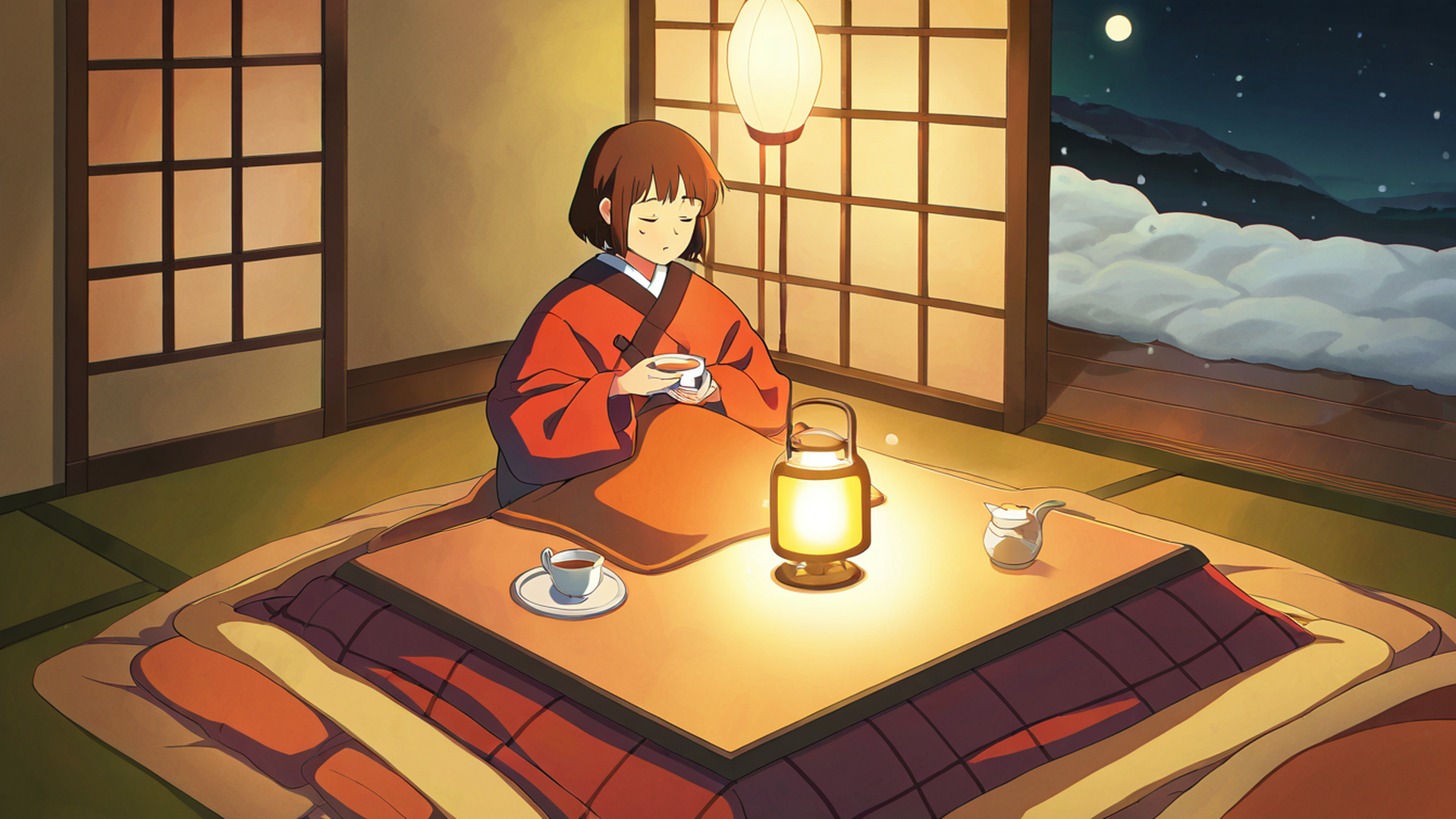
- A person doing a quiet task. Studying, reading, writing, listening to music. The character mirrors what the viewer is doing.
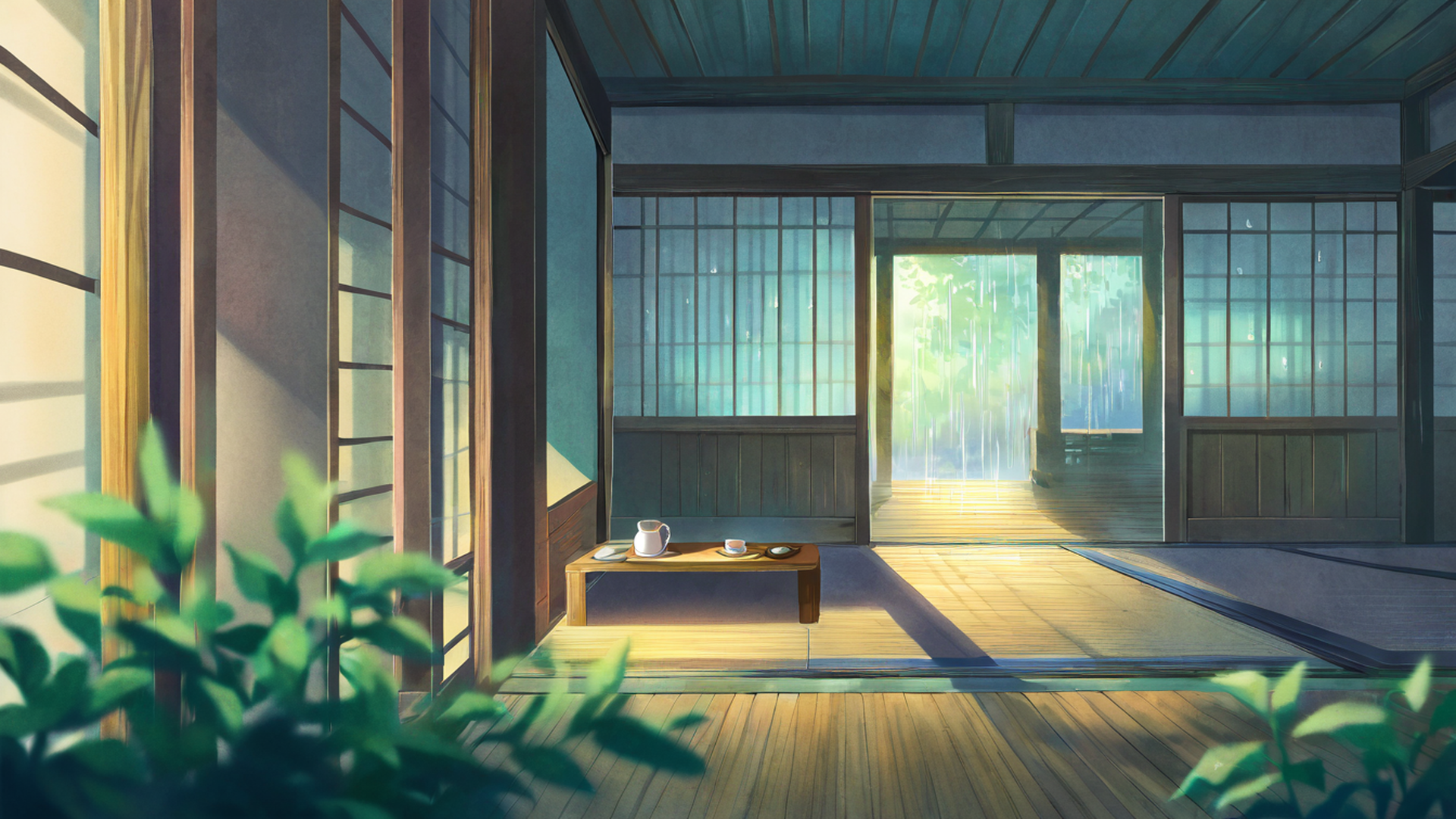
- Night, rain or dusk. Low, warm light, often a single lamp, and a muted palette.
- A window. It adds depth, shows the weather and can show time passing.
- Small, looping motion. A pencil moving, a page turning, a cat’s tail, rain on glass. Enough to feel alive, not enough to pull your eyes away from your work.
- A domestic space. Bedrooms, small kitchens, cafés, train carriages. Ordinary places rather than epic ones.
- Optional texture. Film grain, a slight blur or VHS-style artifacts, a habit lofi shares with vaporwave.
None of these rules are written down anywhere, but break too many of them and an image stops feeling like lofi.
A note on AI and “Ghibli-style” images
This site’s own wallpapers are AI-generated, and their prompts include “studio ghibli inspired” as a style cue; they are not made by, licensed by or affiliated with Studio Ghibli. That is worth saying plainly, because the style is contested ground. When OpenAI’s new image tool set off a wave of “Ghibli-style” AI pictures in March 2025, many people recirculated a 2016 clip in which Miyazaki, reacting to a demonstration of AI-generated animation, called it “an insult to life itself.” The full details of how our images are produced are in how our AI wallpapers are made.
Where to see the originals
If this history makes you want to watch the source material, all of these are available through licensed streaming services and physical releases in many countries:
- Whisper of the Heart (1995). The film behind the original ChilledCow clip.
- Cowboy Bebop (1998). Especially for Yoko Kanno’s score.
- Samurai Champloo (2004–2005). The anime that made Nujabes famous outside Japan.
- My Neighbor Totoro (1988) and Kiki’s Delivery Service (1989). Two of the clearest examples of Ghibli’s quiet, everyday moments.
And if you want the look rather than the history, the wallpaper gallery has rainy windows, lamp-lit desks and night scenes in desktop, phone and ultrawide sizes.
Sources
- Cowboy Bebop, Samurai Champloo, Studio Ghibli and Whisper of the Heart, Wikipedia (production details, dates, broadcast history).
- Ebert, R. (2002, September 12). Hayao Miyazaki interview. RogerEbert.com.
- Winkie, L. (2018, July 13). How “Lofi Hip Hop Radio to Relax/Study to” became a YouTube phenomenon. Vice.
- Bromwich, J. E. (2018, May 3). Pirate radio stations explode on YouTube. The New York Times.
- Alexander, J. (2020, February 24). YouTube briefly terminated a popular live stream channel, creating one of the longest videos ever. The Verge.
- Hamelin, F. (2020, April 23). Pop culture : la “lofi girl” du live YouTube “lofi hip hop radio” habite… à Lyon. Actu.fr (in French).
- Sherburne, P. (2021, October 7). 25 microgenres that (briefly) defined the last 25 years. Pitchfork.
- Holland, O. (2025, March 27). Viral Studio Ghibli-style AI images showcase power and copyright concerns of ChatGPT update. CNN.