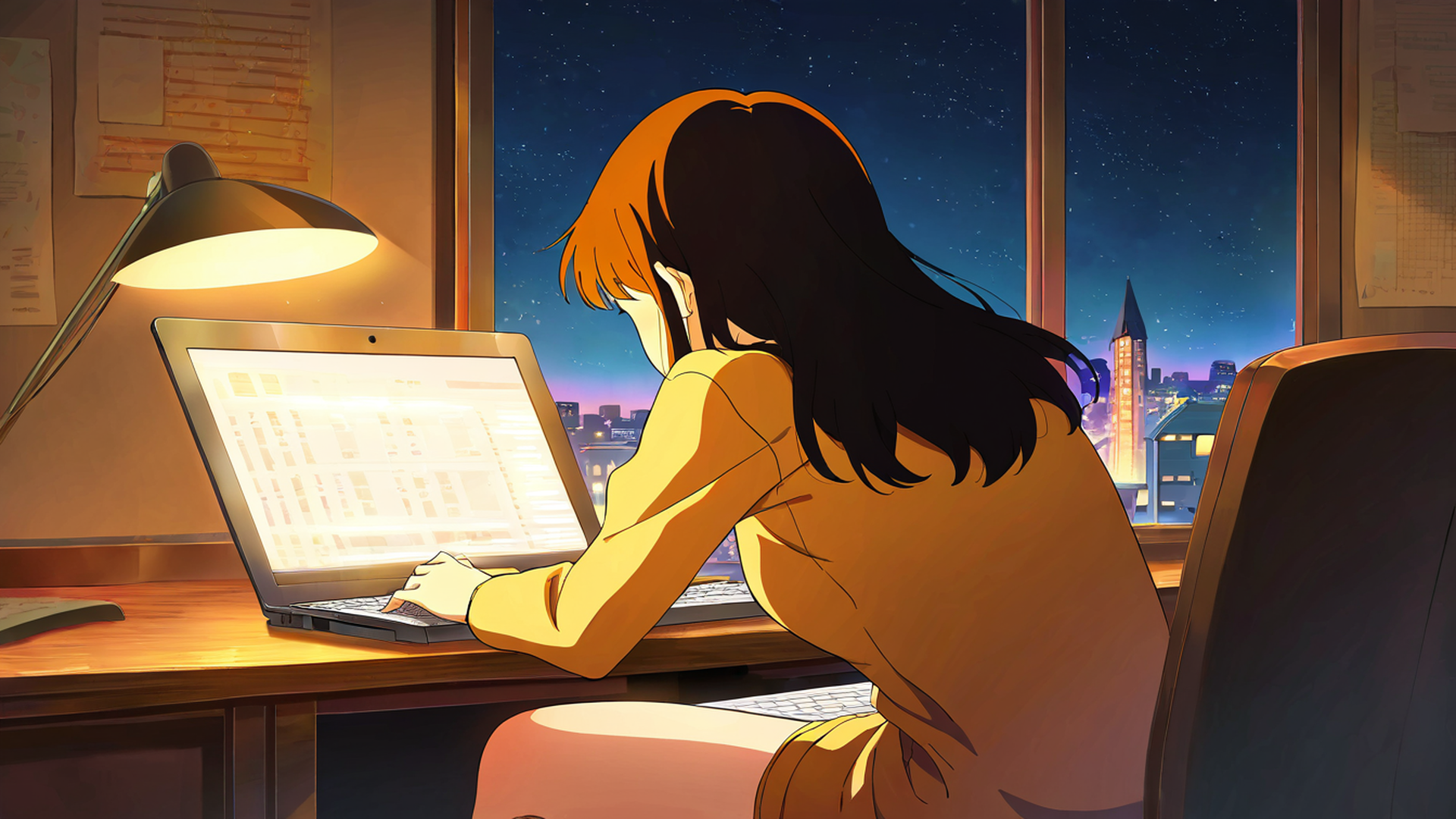
The image is unmistakable. A teenage girl at a desk, pencil in hand, a cat curled beside her, rain tracing lines down the window behind her. The animation is minimal — a few frames cycling every couple of seconds, just enough movement to feel alive. And underneath it, continuously, for years now: lofi hip hop. No interruptions. No “this video has ended” screen. Just the music, the girl, the rain.
I’ve spent more hours looking at that image than I’d care to admit. Not as a casual listener but as someone who, in early 2026, built his own 24/7 lofi stream from scratch and spent weeks studying what made hers work. If you’re going to try to do something yourself, you owe it to the person who invented the format to actually understand what they did and why. So I went deep. I read the interviews, the Reddit threads, the copyright drama. I know more about Dimitri — the French YouTuber who started all this — than most people who’ve listened to the stream for years. This is what I found.
February 2017: A Small Channel Makes a Bet on 24/7
Dimitri had been running a channel called ChilledCow since 2015. It was small, earnest, and doing what a hundred other channels were doing at the time: uploading mixes of lofi hip hop and chillhop, letting the tracks breathe, not doing much else. The format was fine but undistinguished. Lots of people were doing it.
In February 2017, he made a decision that sounds obvious in retrospect and almost certainly didn’t at the time: he started a continuous 24/7 livestream. No interruptions, no scheduled upload windows, no “new video every Tuesday.” Just a stream that ran without stopping, with a looping animation over it. The animation he commissioned was openly inspired by the opening scene of Studio Ghibli’s Whisper of the Heart — a girl studying at a window, warm lamplight, a cat nearby, rain outside. Shizuku, the Ghibli protagonist, became an unnamed girl in headphones. The looping was subtle: pencil moves slightly, cat blinks, rain shifts. Enough motion to feel human, not enough to distract.
The first stream pulled a few hundred concurrent viewers. There was no reason, looking at those numbers, to believe this would become anything. I think about that sometimes when I’m staring at my own concurrent viewer count at 3am — those early nights where the numbers are small and you wonder if anyone actually cares. Dimitri didn’t quit. He kept the stream running.
What Built the Snowball
The growth that followed wasn’t planned and, as far as I can tell, wasn’t the result of any particular marketing push. It was an accumulation of factors that happened to reinforce each other at exactly the right time, in exactly the right cultural moment.
The visual was doing something no pure music channel could. When I was designing my own stream’s aesthetic, I read everything I could find on why looping animations hold attention, and the concept that kept coming up was “soft fascination” — a psychology term for visual content that engages the eye gently without demanding active processing. Ocean waves. A fireplace. An aquarium. Lofi Girl’s animation is textbook soft fascination: there’s movement, so your eye has somewhere to rest, but none of it requires interpretation. You don’t need to track anything. You can study or work while it plays and the visual won’t compete with your thinking. That’s genuinely rare and harder to achieve than it sounds.
There was also the companionship effect — something I hadn’t fully appreciated until I started running my own stream and saw how viewers talked about it. The girl at the desk suggests that someone else is there, working, like you. She’s not looking at you, not talking to you, not asking anything. She’s just present. People studying alone at 1am are not, technically, alone when she’s in the corner of their screen. Body doubling is a real cognitive phenomenon — it’s why libraries work, why coffee shops work — and Lofi Girl delivered it passively, for free, any time of day. I lean into this same principle with my own stream, though I’m honest with myself that she got there first.
The 24/7 format removed a friction I didn’t appreciate until I went back to playlists after weeks of streaming. When you run a playlist, every time it ends you make a micro-decision: find more music, or stop? That micro-decision is a productivity break. The stream eliminated it. You open the tab once, it’s playing, you work, you come back the next day and it’s still playing. That seamlessness is worth more than any individual track.
The timing also mattered enormously. By 2017, lofi hip hop had been building for years — Nujabes had died in 2010 and his influence had been spreading through producers who absorbed his style, J Dilla’s posthumous catalogue was deep in the culture, SoundCloud was full of bedroom artists making patient, dusty instrumentals. The genre had found its sound. What it hadn’t found was a fixed, always-available home. ChilledCow became that home, and once YouTube’s algorithm recognized what it was doing — recommending it to every “study music” and “chill music” search — the growth accelerated into something Dimitri clearly hadn’t anticipated.
By 2018 the channel had millions of subscribers. By 2020 it was one of the most-watched livestreams on the entire platform, north of five million subscribers, tens of thousands of concurrent viewers at any given moment.
The Rename, the Growth, the Ecosystem
For most of the channel’s history, it was called ChilledCow, and the girl in the animation was just “the lofi girl” — what viewers called her informally in comments, not a formal name. In 2021 Dimitri leaned into that organic naming and rebranded the channel to Lofi Girl, making official what the audience had already decided. It was a smart move. The brand wasn’t the channel owner’s name or some abstract word. It was the character herself.
Around the same time, the format expanded into secondary streams: a sleep-focused stream with a different visual, a synthwave radio stream with a retro-futurist aesthetic, a jazz radio stream. Each used the same core logic — continuous music, a single looping visual, a defined mood — applied to a different genre and audience. By 2022 the brand was an ecosystem. My own approach to mood segmentation on lofistudy247.com was informed partly by watching what she’d built: different ambient layers for rain, café sounds, deeper instrumental stretches for users who want to strip out as much melody as possible. She taught me that one format can support multiple moods if the underlying logic is sound.
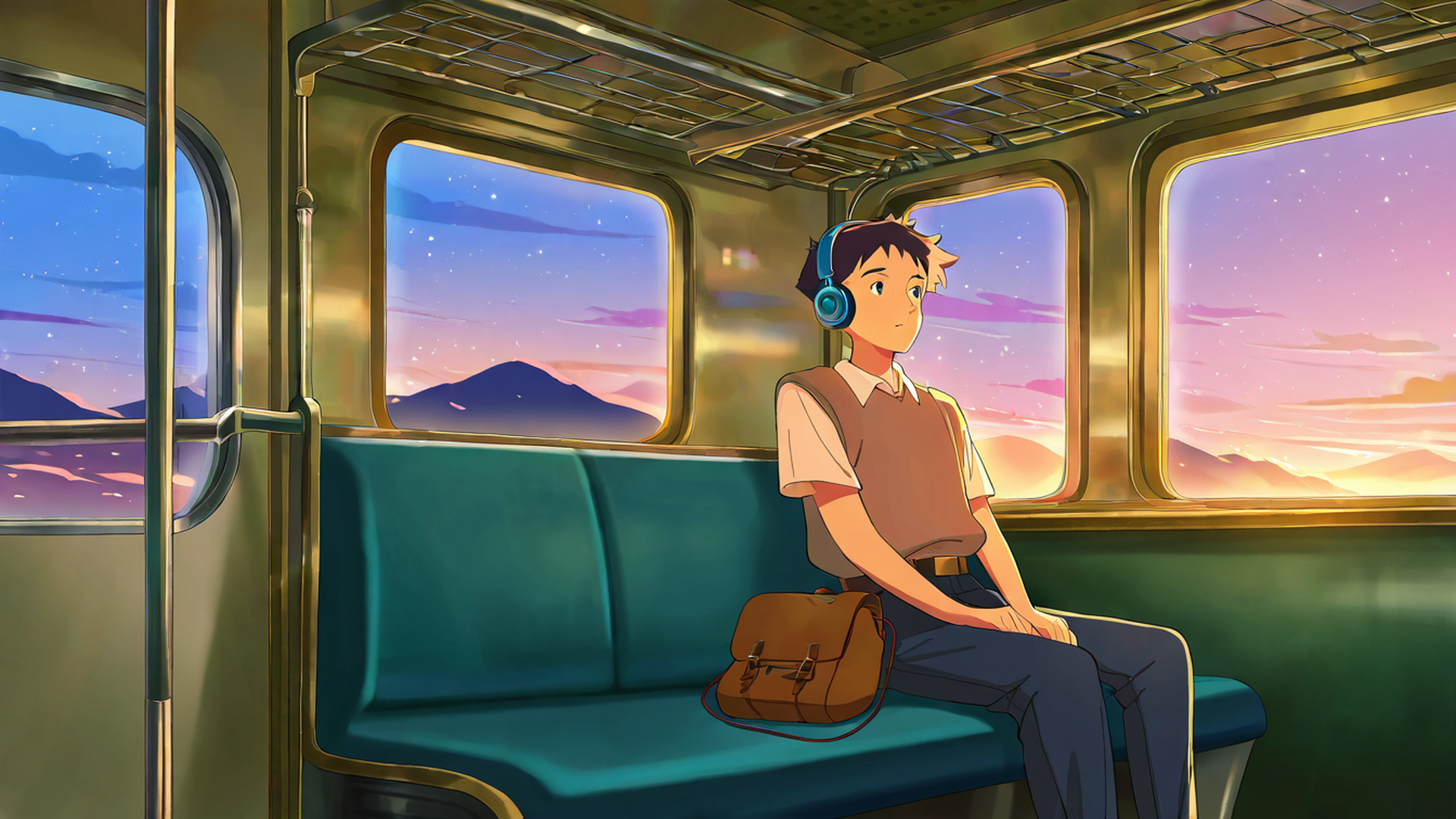
The animation itself evolved through several artists over the years. The version most people recognize — the girl with headphones, the warm sweater, the desk lamp casting that specific quality of light — came out of work done roughly between 2018 and 2020, and it’s the image I was unconsciously picturing when I started designing my own visual language. When I was building the wallpaper gallery that backs my stream, I thought a lot about what she’d gotten right: the warmth of the palette, the specificity of the scene, the sense that this was a real person’s real space and not a generic stock-art “studying” image. Those choices aren’t accidents. They’re craft.
July 2022: The Takedown
Here’s the part of the story I knew in the most obsessive detail before I launched my own stream, because it scared me and I needed to understand it completely.
On July 10, 2022, the lofi hip hop stream went dark. A company called FMC Music Sdn Bhd, based in Malaysia, had filed a copyright claim against the stream. YouTube’s automated DMCA system processed the claim and took the stream down. The claim was false — FMC didn’t own the music being played — but the automated system doesn’t adjudicate. It acts first. Five years of continuous streaming, suddenly gone.
Within hours it was the top thread on Hacker News, the top post in multiple subreddits, trending on Twitter. The Verge covered it. NPR covered it. BBC covered it. Hashtags like #SaveLofiGirl and #JusticeForLofiGirl ran across social media. I remember reading those threads when I was deep in my pre-launch research, and what struck me wasn’t the scale of the reaction — it was the emotional register. People weren’t just annoyed. They were genuinely distressed. They talked about the stream the way you’d talk about losing access to a public park or a library. Something they’d assumed would always be there had been taken.
That told me something important about what this format can become if you build it right. The stream wasn’t just a YouTube channel. It was infrastructure. It was part of how millions of people structured their study sessions, their late-night work shifts, their early morning rituals. When it disappeared, there was a hole in their day. That’s not a thing you can manufacture or plan for — it’s what happens when you show up reliably for long enough that people stop noticing you’re there. The best compliment a 24/7 stream can receive is that people only notice it when it’s gone.
YouTube reversed the strike within roughly 24 hours. The stream came back. FMC Music issued some version of an apology, claiming their automated systems had erroneously flagged the content. The whole episode lasted less than two days but generated coverage that probably brought more new listeners to Lofi Girl than any organic growth campaign could have.
I’ve thought about this incident a lot in the context of my own stream. My setup is technically simpler — I run the ffmpeg process on my server, the health monitor auto-recreates the broadcast if YouTube closes it, the watchdog runs every ten minutes. But the underlying vulnerability is the same. A 24/7 stream depends on a platform’s goodwill in ways a video upload doesn’t. Dimitri had five years invested in that continuous stream. The counter didn’t reset when it came back, but the psychological weight of nearly losing it permanently — that’s something I take seriously as I build mine. I keep backups. I keep the health monitor tight. I don’t take the continuity for granted.
Why the Visual Works (The Honest Version)
A lot of people have written about Lofi Girl’s animation in terms that are too abstract to be useful. Let me try to be more concrete, because when I was designing my own visual approach I needed specifics, not vibes.
The first thing is the loop duration and subtlety. The animation cycles every few seconds, not every few frames. If it moved faster, it would demand attention. If it didn’t move at all, it would feel like a static image and people would close the tab. The specific cadence — slow enough to be undemanding, present enough to feel alive — is load-bearing. When I was setting up the wallpaper rotation for my stream, I spent a lot of time on how quickly scenes should shift and how much motion was appropriate. Her answer was: very little, very slowly. She was right.
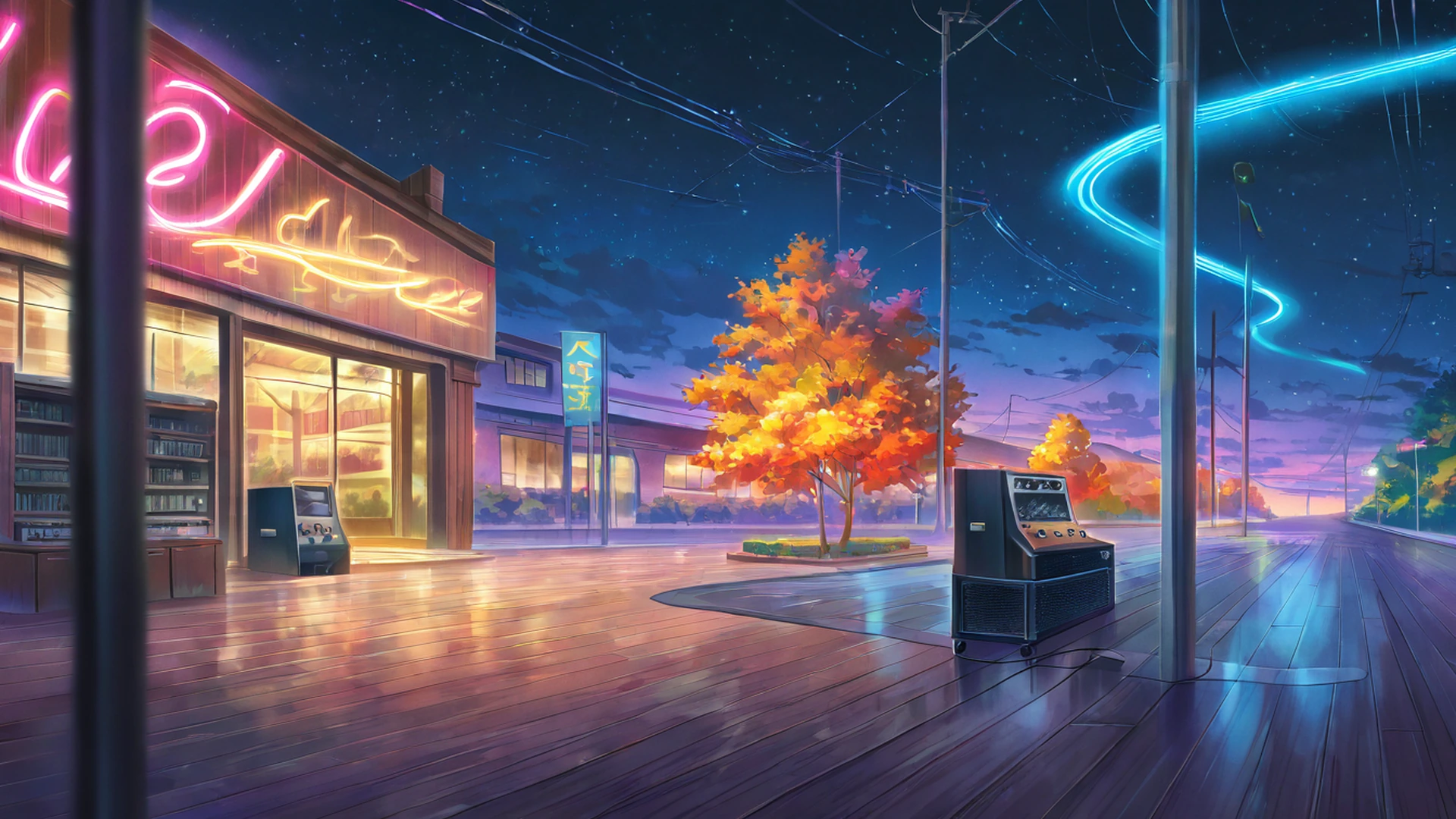
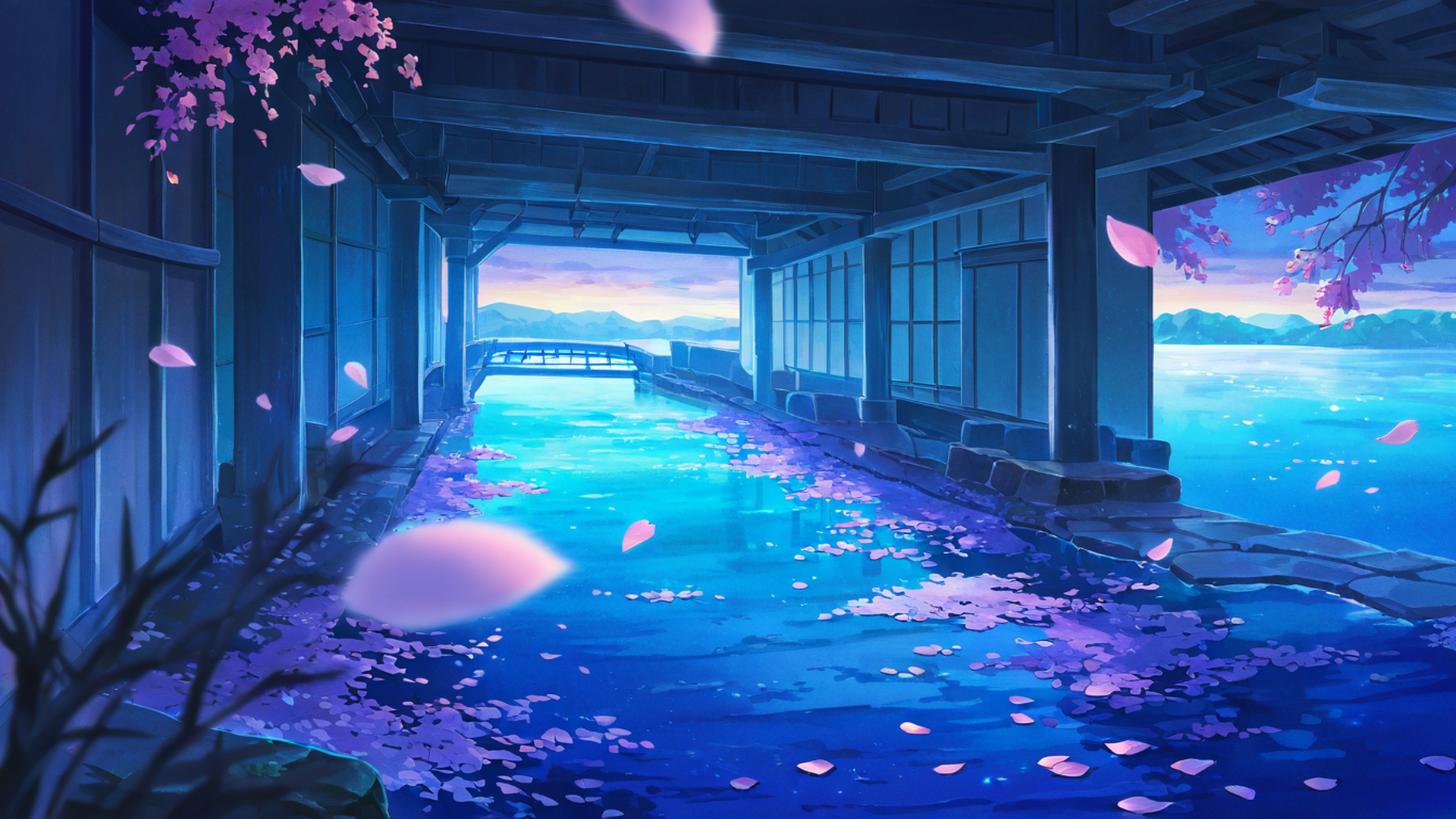
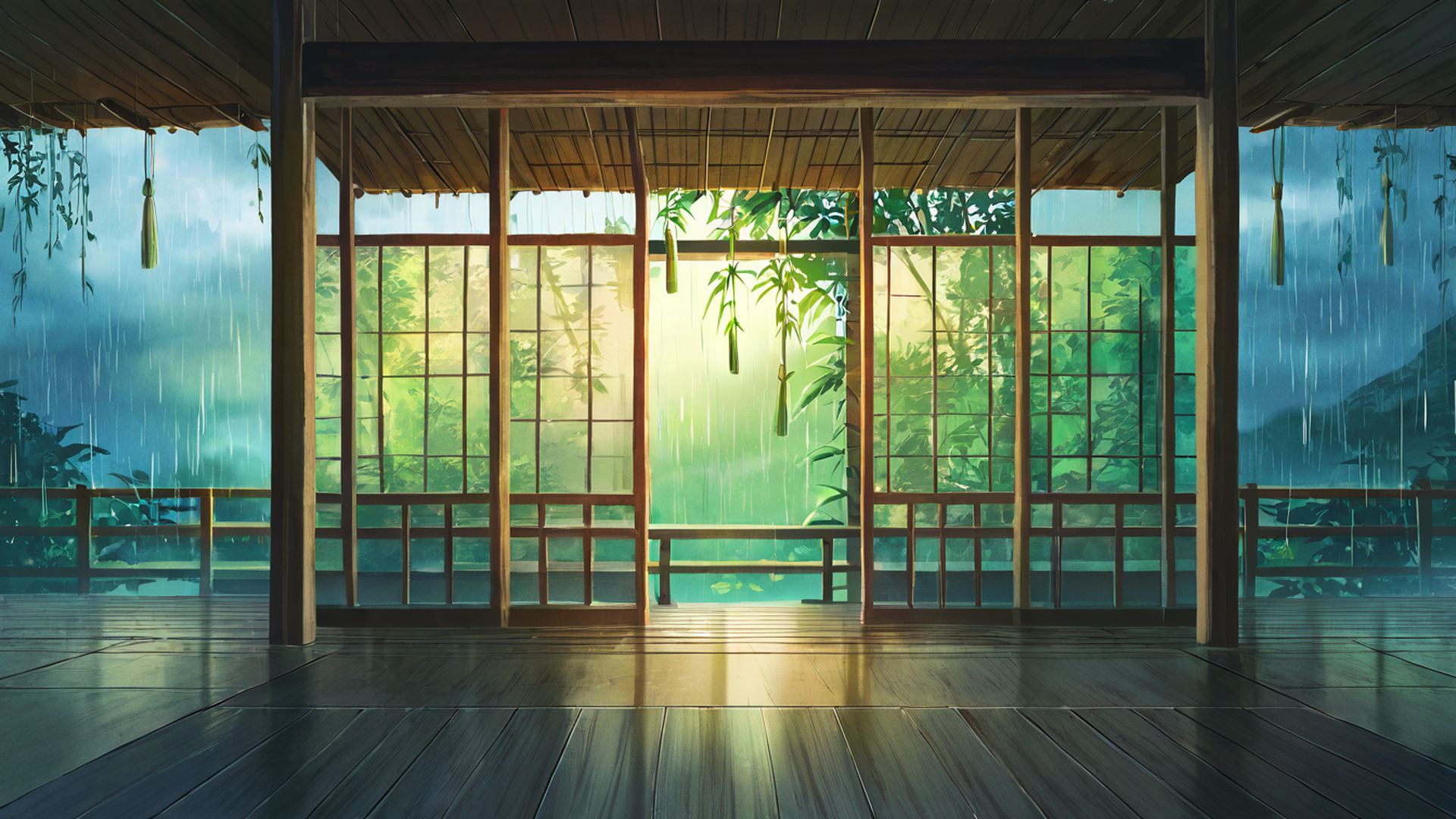
The second thing is the emotional specificity of the scene. The girl isn’t in a generic “studying” pose. She’s in her room, with her cat, at night, in what feels like late autumn or winter based on the quality of the light and the rain. It’s a scene that a lot of people have lived personally — the quiet hours when the work is hard but you’re still at it, when the world outside is dark and wet and your desk lamp is the warmest thing in your field of view. That specificity creates recognition. My own wallpaper library leans into the same specificity: Japanese apartment interiors, rainy windows, specific times of day. Generic “chill” imagery doesn’t do what specific, emotionally honest imagery does.
The third thing is that the visual and the music agree. The animation isn’t dramatic or tense or aspirational. It’s patient, quiet, slightly melancholy, comfortable with doing one thing for a long time. The music is the same. When audio and visual operate from the same emotional premise, the experience is coherent in a way that you feel without being able to articulate. When they fight each other — energetic music under a sleepy image, or the reverse — something is off and you feel that too. Getting this alignment right was one of the things I thought hardest about when I was building my own stream.
The Cultural Footprint
By 2026, I can run my own lofi stream and find an audience because the category exists. That category exists because of Lofi Girl. I want to be direct about that because I think it matters to say clearly rather than paper over it with vague gestures toward “the community.”
Fourteen million-plus subscribers. Multiple billions of total views across the channel. The lofi hip hop stream alone represents an accumulated listening time that dwarfs what most chart-topping artists achieved in the same period — we’re talking about listener-hours that would take tens of thousands of years to play back end-to-end. Spotify now has its own curated lofi playlists. Apple Music has lofi sections. Twitch has lofi streams. Independent channels running the same format exist in Japanese, Korean, Spanish, French, Portuguese, and German. My stream is one of them. None of us would exist in this form without her having proven the format first.
The rebrand expansion — vinyl compilations, merch, live concerts with producers under the Lofi Girl umbrella — is the brand doing what every durable brand eventually must: find ways to exist beyond the single format that made it. Whether those extensions work long-term is unclear to me. But the stream is still the core asset, and it will be as long as YouTube exists and students need study soundtracks.
What I Took From Her
My stream at lofistudy247.com is in her lineage and I’m not going to pretend otherwise. The 24/7 continuous format is her invention. The looping ambient visual is her invention. The Japanese aesthetic palette — the interiors, the rain, the specific quality of warmth and quiet — she made canonical. When I decided to pair the stream with a free 4K wallpaper gallery, part of my thinking was that the visual element she’d pioneered was load-bearing, and I wanted to extend it in a direction that felt like my own contribution rather than a copy.
Where my stream goes its own way: I built in bilingual chat support because my actual audience spans Spanish-speaking and English-speaking listeners and I wanted both groups to feel at home. I put the wallpaper gallery at the center rather than at the margins — the images rotate, you can download them, there are portraits and landscapes and ultrawides depending on your setup. I’ve tried to build something that rewards you for coming to the site directly rather than just leaving a YouTube tab open. The ambient layering goes deeper than her original format: you can have rain with or without café texture, you can adjust how much melodic content is in the foreground. These are real differences, but they’re differences built on her foundation. The foundation she laid is the instrumental lofi 24/7 stream as a reliable, aesthetically coherent study companion. That’s hers.
I researched the July 2022 takedown obsessively before launching because I needed to understand what I was signing up for. A 24/7 stream is a commitment that doesn’t end. The health monitor I run, the backup systems, the watchdog that pings every ten minutes and recreates the broadcast if YouTube closes it — all of that came out of understanding what nearly happened to her. Dimitri ran his stream for five years before the takedown scare. My stream has been running for about four months. I have a long way to go before I’ve built the kind of infrastructure-level presence she has. But I know what that presence looks like, and I know the work it takes to get there, because she showed me.
What the Lofi Girl Story Actually Teaches
The lesson I keep coming back to isn’t about growth strategy or aesthetic theory. It’s about the simple, unglamorous act of keeping something running after the initial excitement wears off.
Dimitri started the stream in February 2017 with a few hundred concurrent viewers. He didn’t know what it would become. He kept it running through the stretch where it was still small, through the stretch where it started growing faster than expected, through the years where it became infrastructure, through the crisis where it nearly ended, through the rebrand, through the expansion. The patience that the music itself embodies — unhurried, comfortable with repetition, not trying to arrive anywhere — turned out to also describe his approach to building the channel.
That’s not a coincidence. The creators who build durable things tend to work in the same register as what they’re building. A 24/7 lofi stream run by someone chasing viral moments would feel wrong. The format and the temperament have to match. Dimitri’s matched what he was building, or he grew into it. Either way, the result was a piece of cultural infrastructure that millions of people depend on without thinking about it.
I think about that often when I’m checking the stream logs at midnight, making sure the health monitor is doing its job. My stream is four months old. I have no idea if I’ll still be running it in five years. But I understand now, in a way I didn’t before I started, what it actually takes to get there. She showed me.